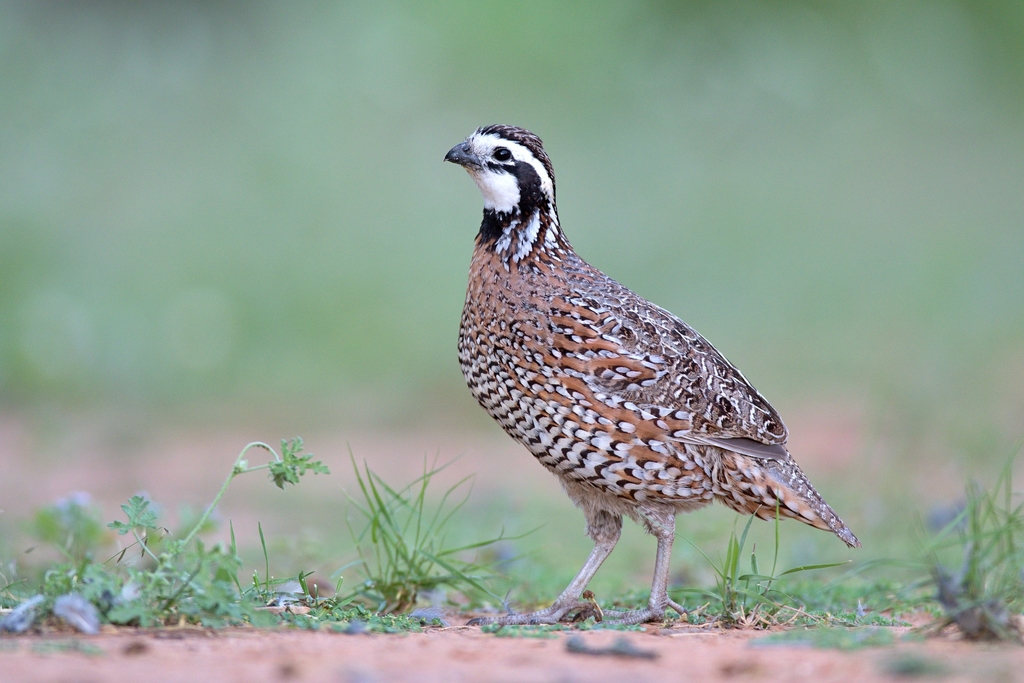
Northern Bobwhite
Colinus virginianus
Also known as: Bobwhite, Bobwhite Quail, Virginian Quail
Habitat
Ground
Diet
PlantSeed
Active Time
Diurnal
Size
172 g
About This Species
Look and listen along brushy field edges, overgrown fencerows and open pine woodland with a thick shrub understorey, where coveys scratch through leaf litter and low cover for seeds and insects. The clear, rising whistled call that gives the bird its name carries well at dawn and dusk in spring and summer, often the easiest way to confirm its presence before you ever see it. Coveys flush explosively when approached too closely, so a slow scan of field margins with binoculars from a distance usually works better than walking straight at cover.
Ethical Viewing Guidelines
- This is a declining, near-threatened species across much of its range, so keep well back from any covey and avoid pushing through the brushy cover it depends on, especially during the spring and summer breeding season.
- Hunting and habitat protections vary widely by US state and are largely absent for the introduced populations elsewhere, so check local regulations rather than assuming a blanket rule.
- Watching from field edges with optics, rather than flushing birds to get a view, does the least harm to a species already under pressure.
Seasonal Activity
442,468 sightings · 2000–2026
Citizen science records via GBIF
Classification
- Kingdom
- Animalia
- Phylum
- Chordata
- Class
- Aves
- Order
- Galliformes
- Family
- Odontophoridae
Traits
- Diet
- PlantSeed
- Foraging
- Ground
- Activity
- Diurnal
- Body mass
- 172 g
Photo
(c) Andrej Chudý, some rights reserved (CC BY-NC-SA)
CC-BY-NC-SA-4.0
Occurrence data from GBIF.