Common Starling
Sturnus vulgaris
Also known as: European Starling, Starling, Estornell Vulgar
Habitat
Ground
Diet
Omnivore
Active Time
Diurnal
Size
77 g
About This Species
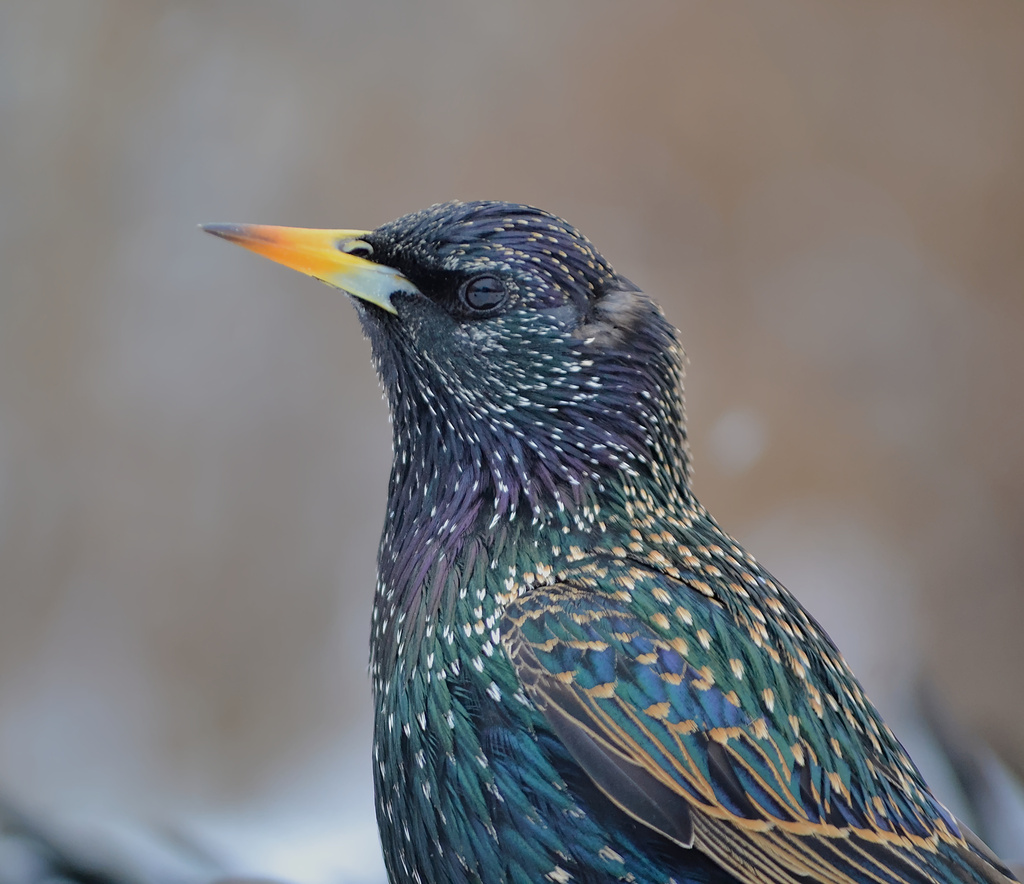
Look for compact, glossy dark flocks probing lawns and farmland for grubs, walking with a confident swagger rather than hopping. The most memorable sighting is a dusk murmuration in autumn and winter, when thousands wheel together above a communal roost, best watched from a distance as the light fades. Breeding adults show a bold yellow bill and an iridescent sheen, while winter birds are heavily speckled with white.
Ethical Viewing Guidelines
- Legal protection differs sharply across its range: it is native and declining in parts of Europe, where nests are protected by law, but it is a non-native species in North America with no such protection and competes aggressively with native birds for tree cavities.
- Keep a respectful distance from nest holes and large roost sites wherever you encounter it, since a winter roost can hold tens of thousands of birds and is sensitive to repeated disturbance.
LCAvesPasseriformesSturnidae
Seasonal Activity
26,206,801 sightings · 2000–2026
Citizen science records via GBIF
All monthsThis month
Classification
- Kingdom
- Animalia
- Phylum
- Chordata
- Class
- Aves
- Order
- Passeriformes
- Family
- Sturnidae
Traits
- Diet
- Omnivore
- Foraging
- Ground
- Activity
- Diurnal
- Body mass
- 77 g
Photo
(c) Timothy Lindsey, some rights reserved (CC BY), uploaded by Timothy Lindsey
CC-BY-4.0
Occurrence data from GBIF.